



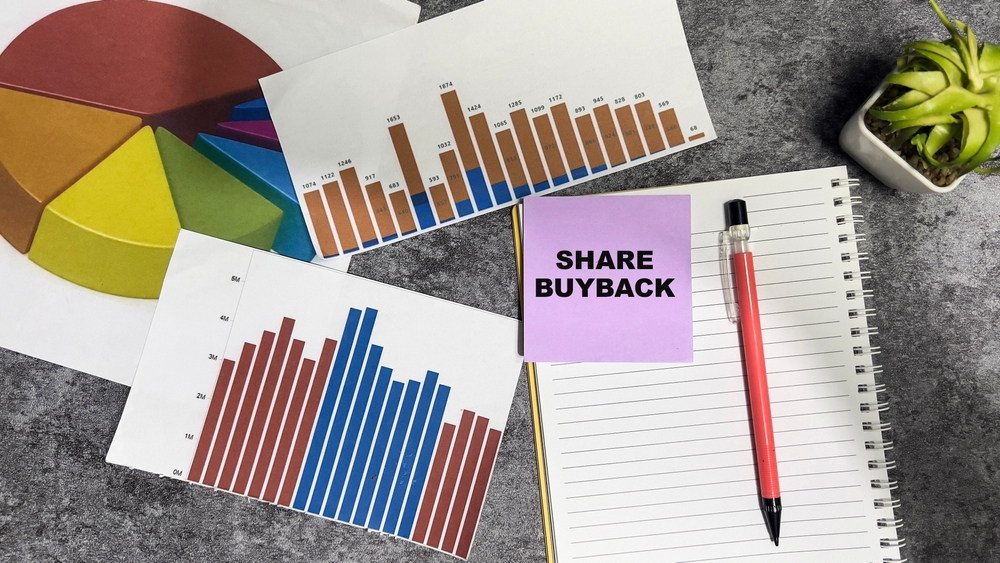
Companies’ capital allocation decisions can significantly influence both the value of an investment and the market’s perception of their performance. However, a share buyback is not automatically a positive step. Its benefits depend primarily on the purchase price, the method of financing and management’s motivation.
What Is a Share Buyback?
In a share buyback, a company purchases its own shares from investors, most commonly on the stock exchange. It can subsequently cancel the shares or retain them for future use. If the number of shares outstanding decreases, the remaining investors’ ownership stake in the company increases slightly. Unlike dividends, however, cash is received only by those who decide to sell their shares.
Why Companies Buy Back Their Own Shares
Companies often use buybacks when they have excess cash and cannot identify sufficiently attractive investment opportunities. Management may also consider the shares undervalued and view their purchase as an efficient use of capital. However, buybacks can also be used to offset shares issued to executives or employees, meaning that the number of shares outstanding may not actually decline significantly.
How Buybacks Affect Shareholders
If a company cancels the repurchased shares, the same amount of profit is distributed across a smaller number of shares. As a result, earnings per share, or EPS, may increase, along with the percentage ownership of the remaining investors. A higher EPS can support the share price, but the market also considers revenue, margins, debt levels and the company’s overall business development.
Share Buybacks as an Efficient Form of Shareholder Returns
Compared with dividends, buybacks offer greater flexibility. Investors can decide whether to sell their shares, while the company can adjust the volume of purchases according to its current financial situation. A buyback delivers the greatest benefit when a company purchases its shares below their intrinsic value and therefore uses its capital efficiently (if you are also interested in the advantages and risks of dividend payments, you can read more about this topic in our previous article).
When a Buyback Merely Embellishes Results
Growth in EPS does not necessarily result from higher profits and may instead be caused solely by a reduction in the number of shares. Management can therefore improve per-share indicators without achieving genuine business growth. Buybacks may also divert attention from stagnant revenue, weaker margins or a slowdown in the company’s operations. Investors should therefore examine what is actually driving EPS growth (to learn which indicators can help assess a company’s true performance more accurately, see our previous article).
The Buyback Price Matters
A buyback creates value primarily when a company purchases its own shares at an attractive price. If it buys them at an overvalued price, it may be using shareholders’ capital inefficiently. Investors should therefore compare the repurchase price with the company’s financial results, valuation and historical multiples rather than assessing the programme solely by its size.
Debt-Financed Buybacks and Their Risks
Not every buyback is financed from available cash. A company may borrow money to purchase its shares, increasing both its debt and interest expenses. Higher debt may subsequently limit investments, acquisitions or the company’s ability to withstand a weaker period. It is therefore important to monitor developments in cash reserves, net debt and free cash flow.
How Investors Should Evaluate a Share Buyback
Investors should determine whether the number of shares outstanding is genuinely declining, at what valuation the company is purchasing its shares and whether it retains sufficient cash for further development. A buyback should also be compared with other uses of capital, such as investments, debt repayment or dividends. It is neither inherently good nor bad—the decisive factors are its price, financing and whether it supports the long-term interests of shareholders.
For more investment trends and useful tips, explore our previous articles on the AxilAcademy website.

He has been trading in the capital markets since 2002, when he started as a commodity Futures trader. Gradually he shifted his focus to equity markets, where he worked for many years with securities traders in Slovakia and the Czech Republic. He also has trading experience in markets focused on leveraged products such as Forex and CFDs, and his current new challenge is cryptocurrency trading.